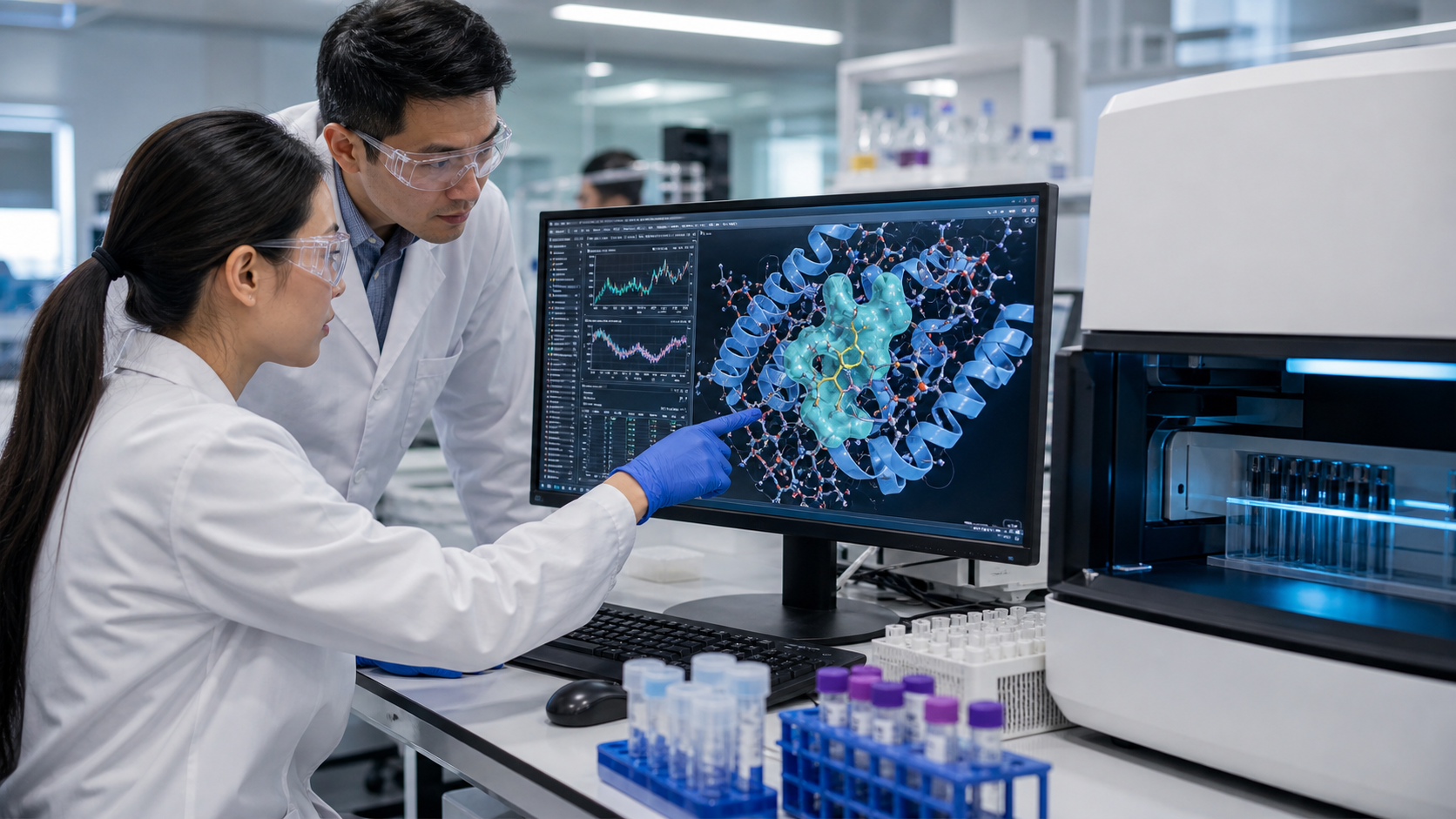
AI drug discovery is one of the most promising areas in technology, but it is also one of the easiest to overstate. A model can generate candidates, predict structures, and narrow search spaces. That does not mean the candidate will work in a living system, pass safety hurdles, or become a viable therapy.
Why benchmarks matter
Biotech needs benchmarks that connect model performance to experimental outcomes. It is not enough to show that an AI system can produce plausible molecules. The question is whether those outputs reduce the number of failed experiments and improve the odds of a successful program.
Where AI is genuinely useful
AI can help prioritize compounds, analyze biological data, find patterns in literature, and support trial design. It is especially useful where the search space is too large for traditional methods alone.
The lab remains the judge
The important reality is that biology is not software. Models can guide decisions, but experiments still decide what is true. That is why the strongest biotech companies will combine computational speed with disciplined lab validation.
The future of AI biotech is not less science. It is more focused science, with better tools helping researchers ask better questions faster.