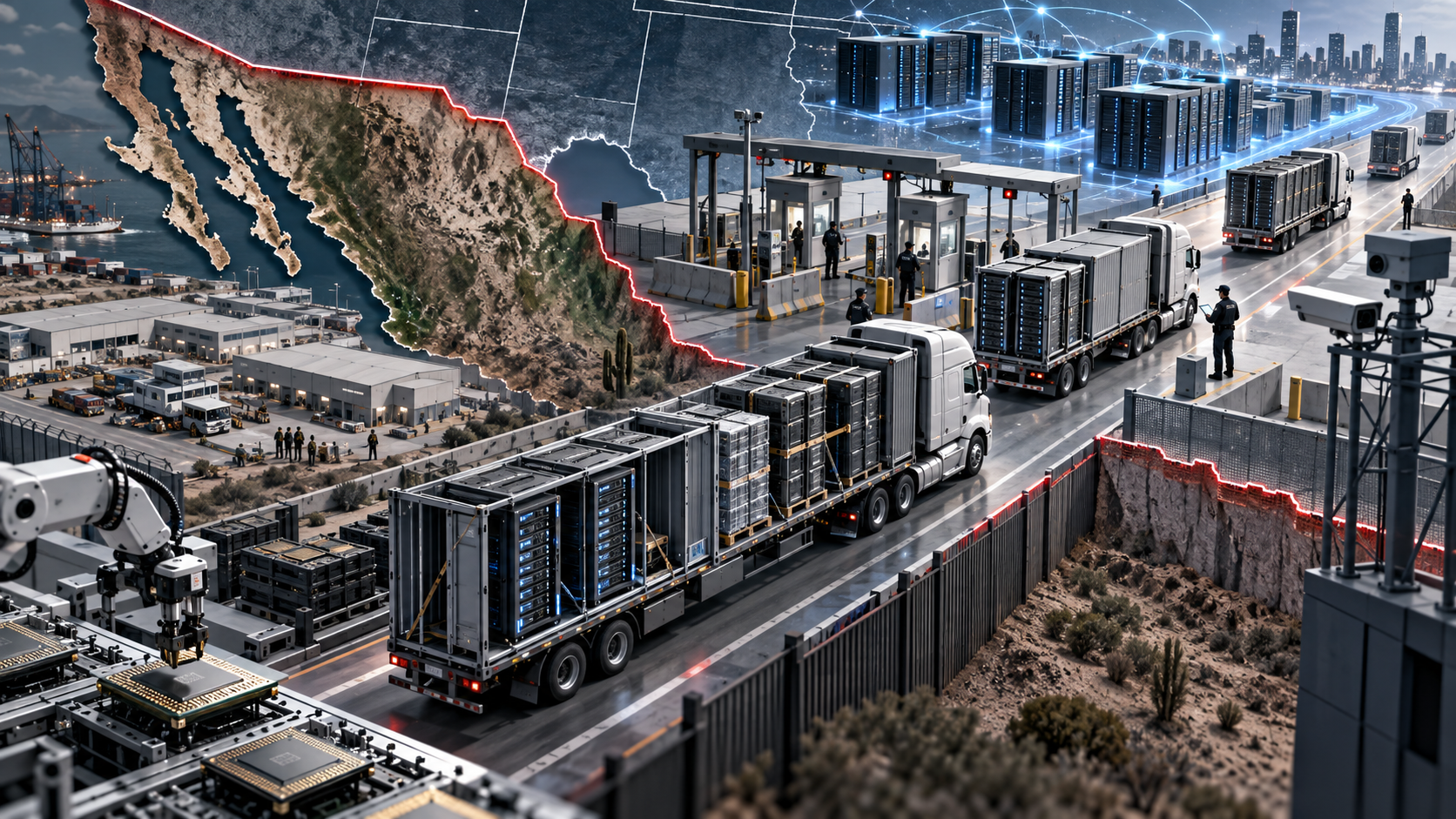
What happened: The Wall Street Journal reported that the U.S. is pressing Mexico to tighten origin rules around AI hardware exports, including chips and servers, as part of broader North American trade negotiations. The goal is to prevent Chinese-linked components from moving through Mexico into the U.S. market under favorable trade terms.
That may sound like a trade-law detail. It is actually another sign that AI infrastructure is becoming a strategic supply-chain category. The policy fight is expanding from advanced chips themselves to the servers, components and assembly routes that turn chips into usable computing capacity.
Why it matters
AI hardware is no longer just a technology procurement issue. It is now tied to tariffs, rules of origin, export controls, national security and regional manufacturing. If Washington treats AI servers like a strategic industrial good, then the cost and location of assembly become part of the AI buildout.
Mexico matters because it is already a major manufacturing bridge into the U.S. market. For companies assembling servers or electronics there, stricter content rules could force deeper supply-chain tracing, new sourcing decisions and higher compliance costs. For policymakers, the question is whether North America can build a trusted AI hardware base without slowing deployment or raising prices too much.
Market impact
The immediate market impact depends on details. Strict rules could raise costs for server assemblers and component suppliers that depend on mixed global sourcing. But they could also benefit companies with stronger North American manufacturing footprints, better traceability and more localized supplier networks.
The larger signal is clear: the AI supply chain is being pulled into the same strategic trade framework that already affects semiconductors, batteries and electric vehicles. Investors should expect more scrutiny around where AI infrastructure is made, what components it contains and whether supply chains can pass geopolitical tests.
What to watch next
- Whether AI servers receive auto-style North American content thresholds.
- How Mexico balances U.S. pressure with its own manufacturing competitiveness.
- Whether server makers disclose more detail on component origin and assembly.
- Potential cost pass-through to cloud providers and AI infrastructure buyers.
Sources: Wall Street Journal reporting on U.S.-Mexico AI hardware rules; AP reporting on U.S.-China AI competition; Reuters coverage of AI infrastructure markets.